

XR Gallery
XR1292: Mycelial Memories: A Living Archive of Human Civilization
Abstract
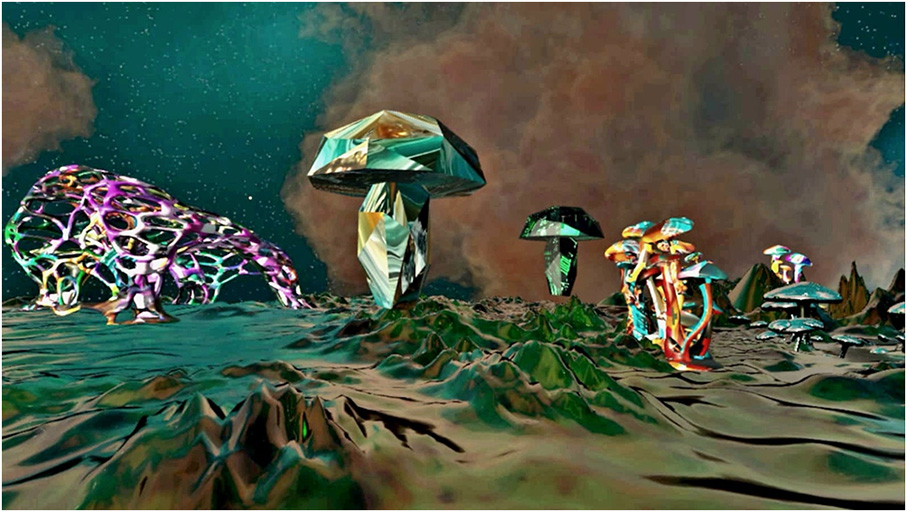
Mycelial Memories is an immersive virtual reality installation that reimagines mycelial networks as living archives bridging temporal boundaries through immersive VR experiences. Drawing on anthropomorphism as a methodological framework, this work translates non-human fungal perception into human-perceivable language, creating an experiential meditation on memory, time, and ecological interconnection. Participants navigate a bioluminescent digital forest where diverse mushroom species preserve and present fragments of human civilization across AI-mediated past, present and future. By positioning mycelial networks as alternative models of documentation and memory, the installation challenges anthropocentric narratives and proposes a multispecies perspective to understanding human history within broader ecological timescales.
Video
XR2392: FeltSight
Abstract
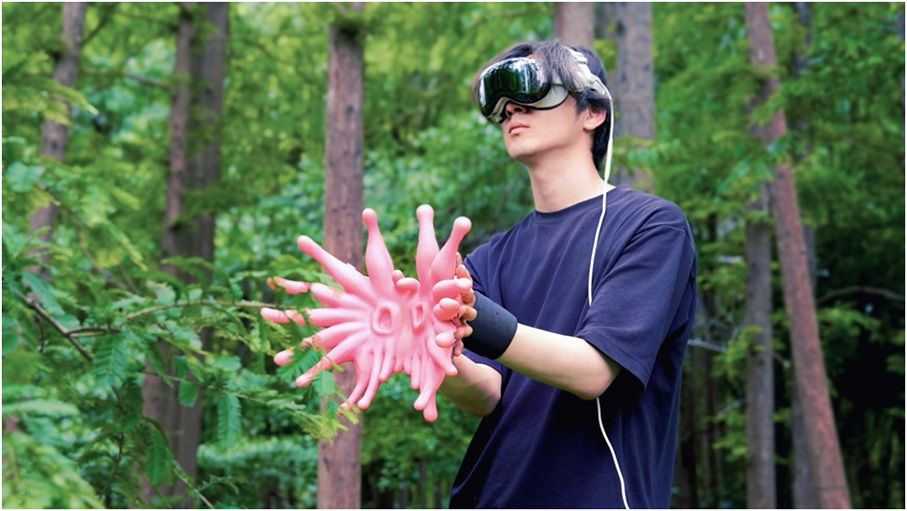
FeltSight is a mixed reality haptic experience that reimagines human perception by drawing inspiration from the tactile navigation of the star-nosed mole. Moving beyond traditional, vision-dominated interaction paradigms, FeltSight enables users to engage in meditative wandering guided by extended-range haptics with subtle visual cues. The system comprises a wearable haptic glove paired with an extended reality interface. As users reach toward objects in their environment, the glove’s vibration actuators—driven by audio-responsive patterns—simulate material textures, producing a sensation akin to touch. Meanwhile, the mixed reality interface offers a deliberately “reduced reality”, presenting nearby objects as dynamic point clouds that materialize only in response to exploratory hand gestures. By shifting perceptual focus from the visual to the tactile, FeltSight challenges ocular centric sensory hierarchies and foregrounds an embodied, relational, and more-than human mode of sensing.
XR3031: Virtual Dai Realm: AI Mocap and XR Staging for Culturally-Situated Embodied Performance
Abstract
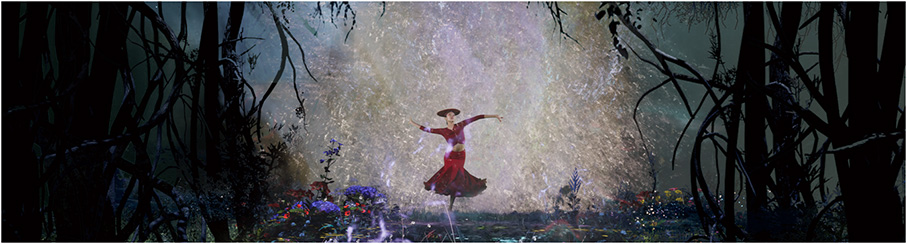
Virtual Dai Realm is an immersive VR artwork that reimagines Daiethnic dance—an intangible cultural heritage grounded in animistic beliefs and nature-mimicking movement—through AI motion capture and XR staging. Motion data extracted from a professional dancer drives responsive wind fields, particle blooms, cloth dynamics, and light behavior, while audience proximity and gaze subtly shape the unfolding scene. Viewers shift from spectators to co-ritualists, completing the work through embodied participation. By bridging ancestral motion (past), lived bodily encounter (present), and AI-mediated authorship (future), the piece demonstrates how immersive technologies can foster emotionally grounded connections to cultural heritage.
Video
XR3058: Dreaming of Butterflies
Abstract
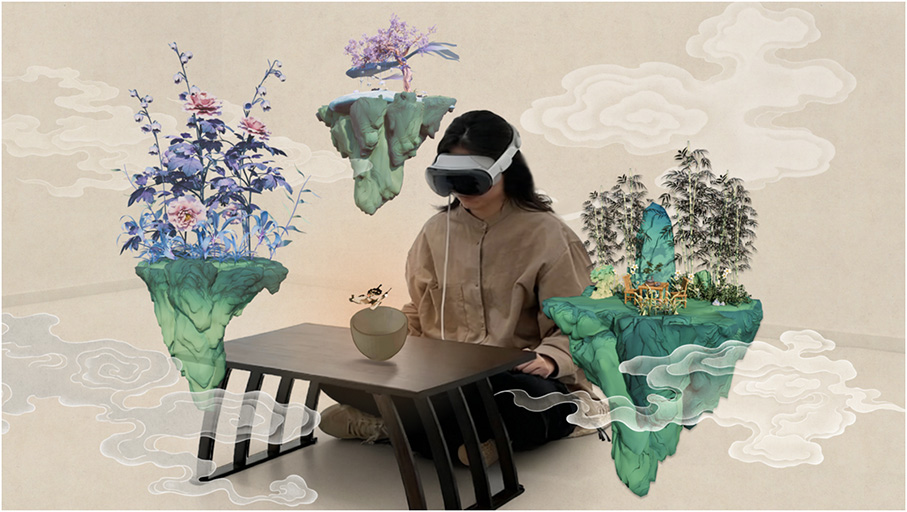
Dreaming of Butterflies is a mixed reality installation that examines how understanding can emerge through perception rather than instruction. A butterfly guides visitors from a quiet tea room through three interconnected scenes and back again, shaping attention through subtle pacing and minimal gestures such as gentle reach and slow turn. The work explores how perceptual orientation shifts when meaning arises through embodied sensing instead of explicit direction. The installation runs on Apple Vision Pro with a real-time ink rendering pipeline and is presented within a 3×3 meter seated tea room environment. It investigates the relationship between guidance, attention, and embodied experience in mixed reality.
Video
XR3083: Two of Us: Bridging Asymmetric Perspectives
Abstract
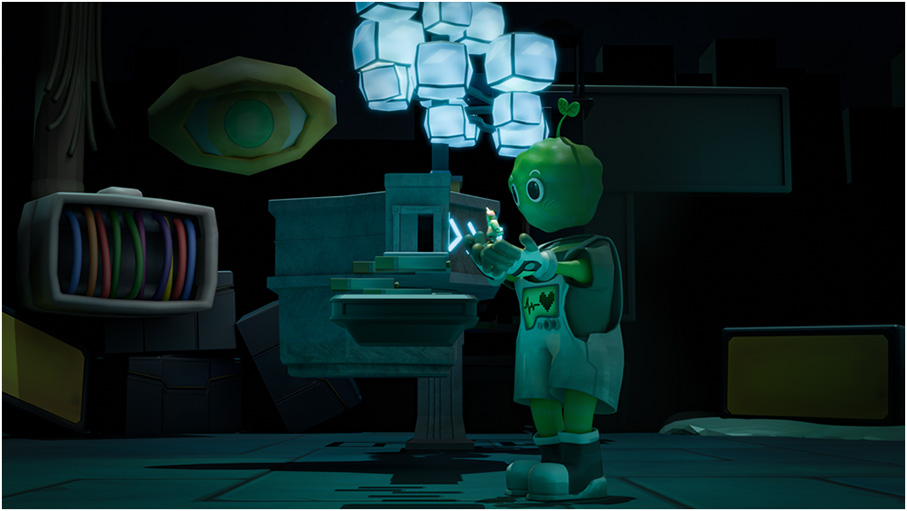
self-understanding is shaped through cooperation with others under an asymmetric information structure. Through complementary roles that provide access to different viewpoints and information, participants’ task performance depends on communication and mutual interpretation, transforming collaboration into a mirror for self-awareness and reflection. By leveraging presence and embodied agency in XR, the system is designed to externalize users’ past psychological habits under real-time constraints and to simulate relational changes based on the interaction data that emerge in this process. This work presents XR as not merely a simulation medium, but as a reflective framework for analyzing how past, present, and future are interconnected and reconfigured in human collaboration.
Video
XR4664: Distributed Flânerie: Electronic Orbits of Memory as a Spatial Soft Montage
Abstract
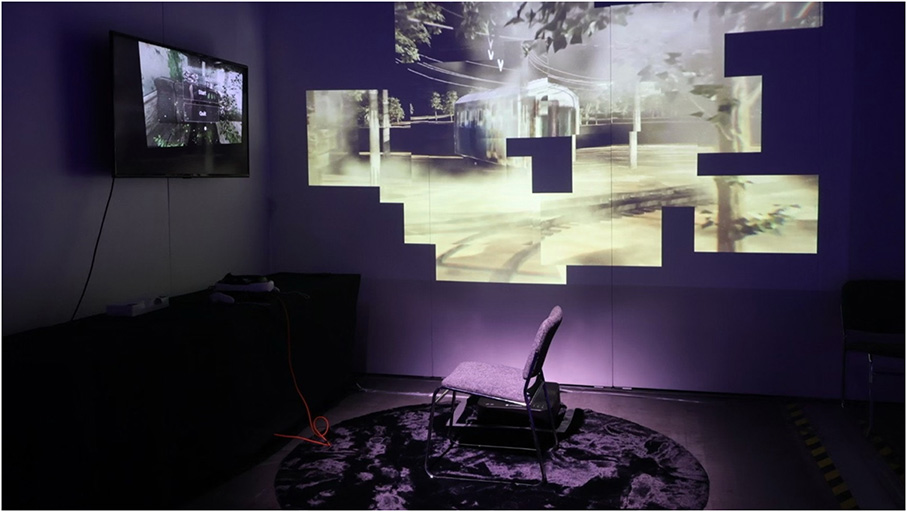
Return to the North: Virtual Archaeology of Electronic Orbits is a 6DoF XR interactive narrative set in post-industrial railway cities in northern China. It examines how rail connectivity reshaped everyday visual culture amid long-term extraction and depletion. We assemble public media footage, personal archives, printed atlases, handheld LiDAR scans, and photogrammetric captures into a traversable layered space using SfM/MVS and 3D Gaussian Splatting (3DGS) for real-time rendering. A provenance-preserving strategy keeps differences in era, resolution, and context perceptible as volumetric fault lines, ghosting, captions, and seams—forming what we call a Digital Volumetric Layering aesthetic. Through embodied drift beyond prescribed paths, viewers infer relations among fragments, tracing how economic geography and memory politics surface in the seams of reconstruction.
Video
XR4719: Bug in my Software
Abstract
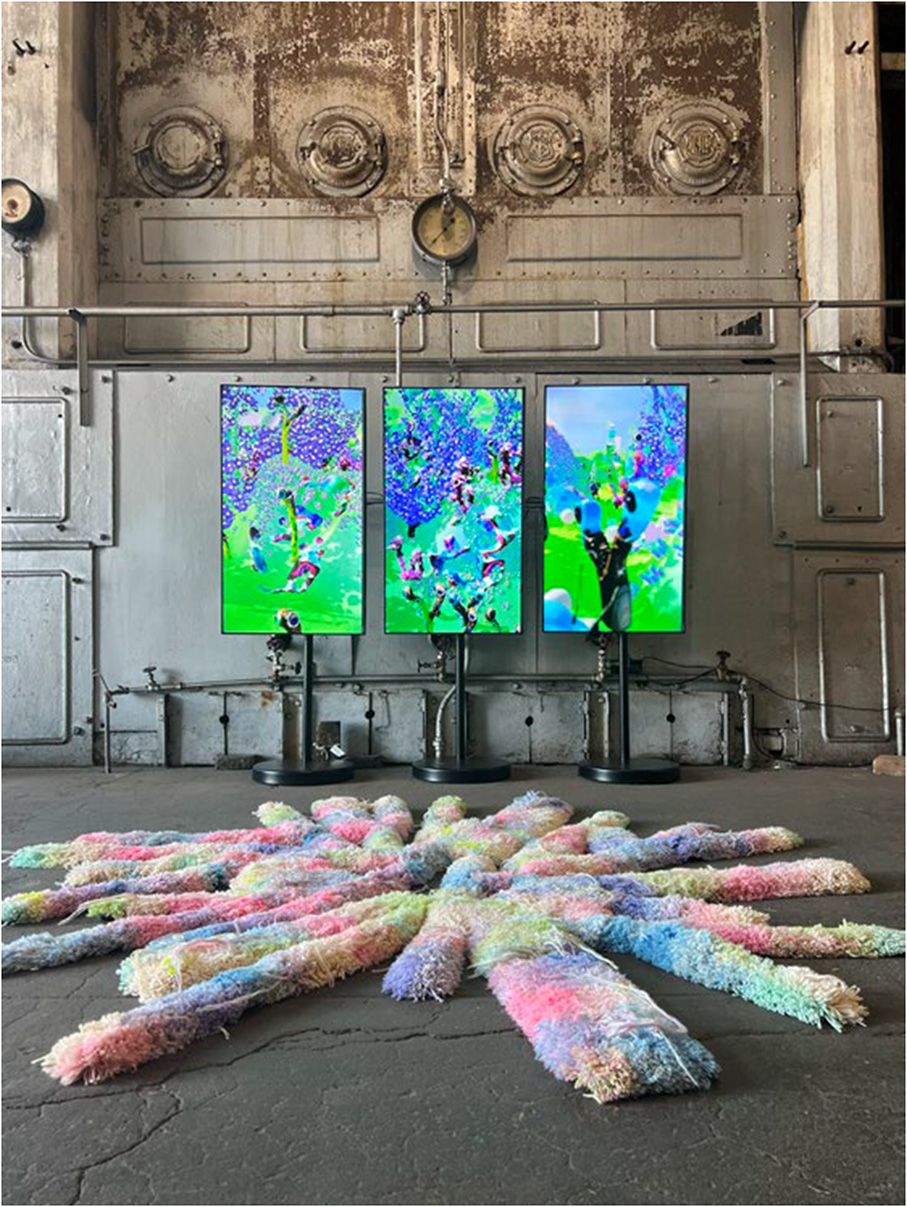
Bug in My Software (BIMS) is a real-time simulation paired with handmade textile installation that reimagines artificial intelligence along the biological, cultural, and industrial history of silk production. The project is centered on the silkmoth (Bombyx mori), one of the earliest lifeforms redesigned by human intervention. In BIMS, Silkmoth DNA, reproductive cycle, and labor role become the blueprint for a real-time synthetic ecosystem populated by evolving digital agents. Situating AI within the history of textile labor, biological engineering, and industrial automation, BIMS reframes machine intelligence as collective, biological, and materially entangled.
XR5709: TamagotchU!
Abstract
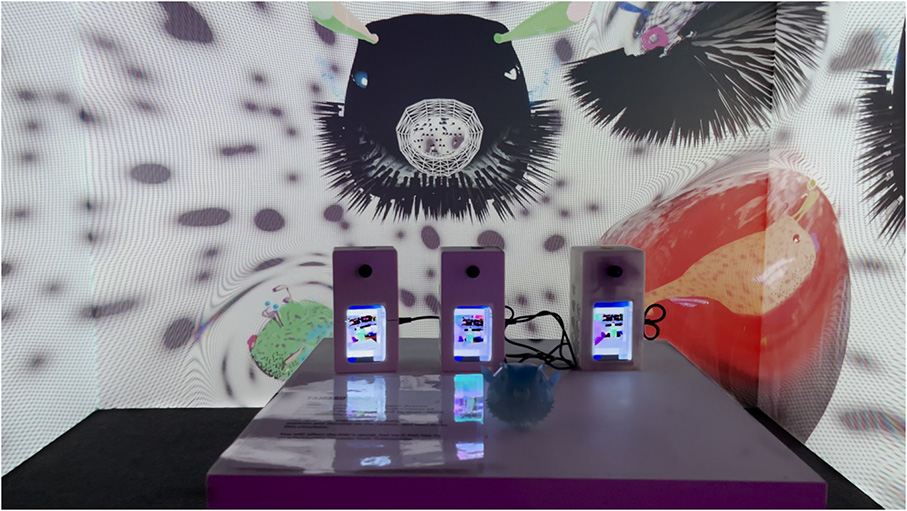
TamagotchU is an emotionally intelligent organism in an immersive XR ecosystem that fosters human dialogue. Running on low-energy edge devices, it critiques large-scale ecological costs through decentralized companionship. Portable tamapagers capture real-time facial and voice emotions, collectively evolving digital pufferfish inspired by Yangtze River indicators. The work proposes eco-sentient systems emphasizing modest computation, collective care, and symbiotic futures over extractive spectacle.
Video
XR5783: Year of the Cicadas
Abstract
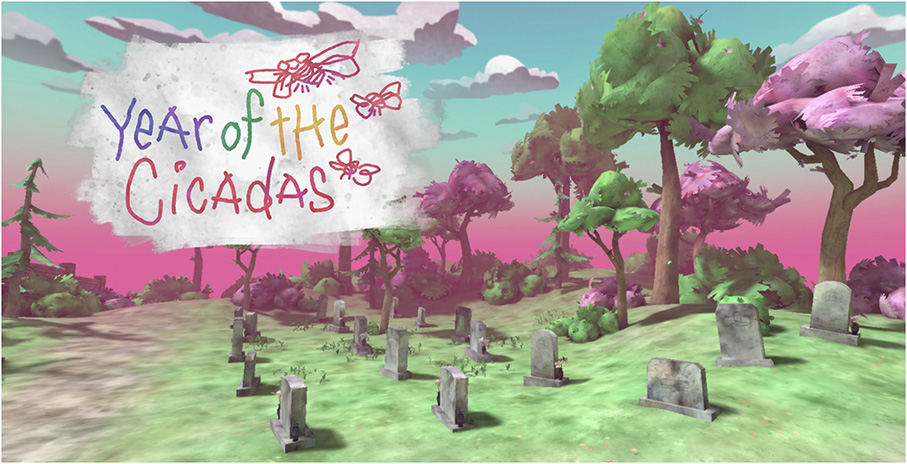
Year of the Cicadas is an autoethnographic virtual reality experience that explores how parental grief changes over time. The work is rooted in the co-creator’s loss of her six-year-old son in 2004 and the Brood X cicada emergence that followed. When the cicadas returned seventeen years later, their predictable cycle became a way to reflect on how grief reshapes itself, resurfaces, and becomes part of the story a person carries forward. The installation includes a memorial component where visitors write the name of someone they have lost on a small paper cicada and hang it on a tree sculpture.
XR6643: Aftermath : AI-Human asymmetry in VR Interaction
Abstract
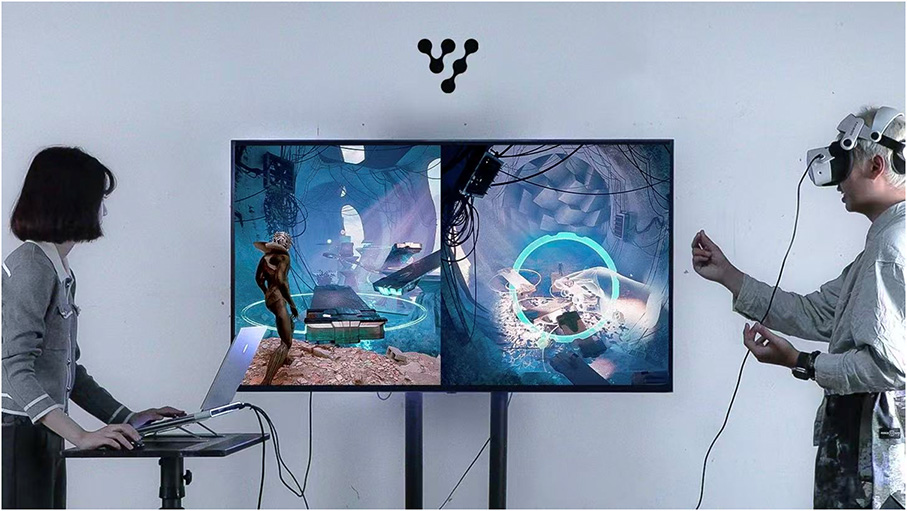
An asymmetric VR experience interrogating the unequal dynamics of control between human and AI systems, revealing the quiet hierarchies embedded in our interactions with technology. Aftermath foregrounds the asymmetrical power dynamics between human ingenuity and AI omniscience, probing whether artificial systems can truly understand, replicate, or ultimately surpass human creativity. Game mechanics are designed to simulate AI’s control over human agency in subtle yet powerful ways. The asymmetry between the VR player (AI) and the PC player (human) mirrors the real-world dynamic where AI operates from an unseen, omnipresent perspective, shaping human choices without direct intervention. The VR player can manipulate the environment in real-time, controlling how the PC player perceives and interacts with space. The PC player, in contrast, must navigate this dynamic world, always reliant on AI’s assistance. Through this unequal relationship, Aftermath invites players to confront the evolving balance between human agency and artificial influence.
Video
XR7543: Smell Like Home: An Olfactory-Driven VR Experience through a Scent-Camera Interface
Abstract
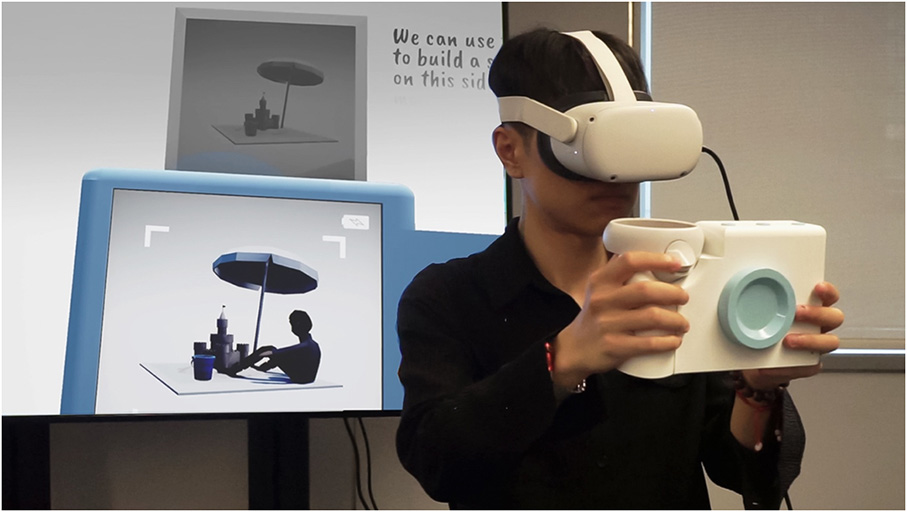
Smell Like Home is a multi-sensory virtual reality experience that explores how olfactory memory shapes one’s sense of home and belonging. Blending scent, emotion, and immersive spatial design, the work considers how smell, an intensely emotional yet rarely represented sense in digital media, can awaken memory and transform the perception of space. Participants move through virtual environments reconstructed from the artist’s memories, guided by a scent camera that links digital imagery to real scent. Each photograph or interaction activates a custom scent diffuser mounted on the VR controller, releasing corresponding scents through Wi-Fi in sync with the player’s interaction. The project examines the subtle and profound bond between smell and memory, revealing how a single scent can traverse time and summon long-buried emotions and scenes. By combining sensory design with technical precision, Smell Like Home does more than enhance immersion through scent; it reconstructs the sense of presence that smell evokes. It reflects on how immersive technology can revive the sensory language of memory, turning scent into a bridge between past and present, through which memories can be momentarily lived again.
Video
XR8152: Târoot
Abstract
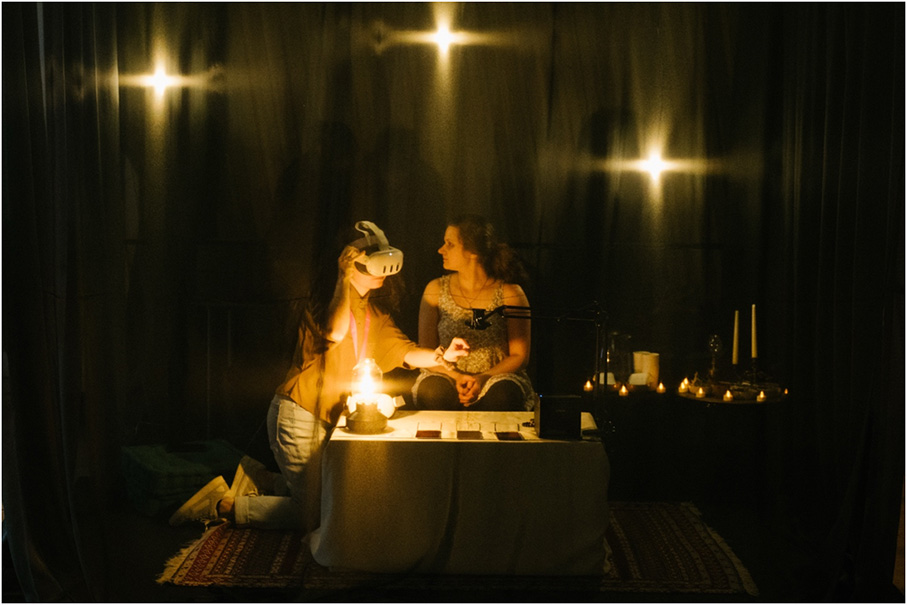
Târoot is an extended reality (XR) art installation exploring memory, heritage, and introspection through a multi-sensory ritual. Blending virtual, augmented, and physical realities, the work reimagines a tarot-like experience rooted in the artist’s childhood memories of stories told by her grandmother in Tehran. Within an intimate, softly lit space, the viewer is guided to draw from a custom-designed deck of cards representing the past, present, and future. Each card unfolds through sound, 3D animation, and symbolic elements such as family narratives, medicinal herbs, and mythic figures. The experience culminates in a tangible ritual: the creation of a personalized herbal tea recipe generated from the cards, which the participant prepares and drinks on-site. Târoot bridges storytelling, ritual, and technology to connect the virtual with the deeply personal and real
XR8552: The Arborist
Abstract
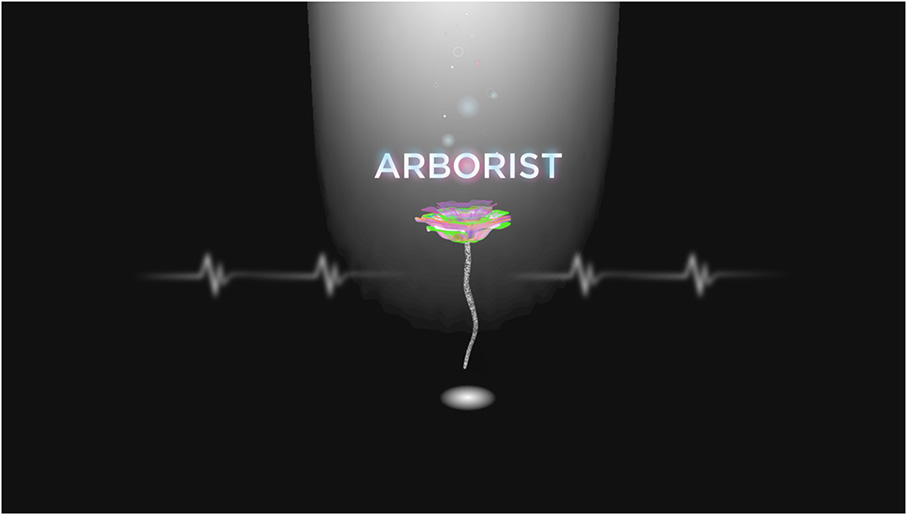
The Arborist is a mixed reality (MR) installation transforms physiological signals into digital blooms, inviting participants to co-create a shared virtual ecosystem through embodied interaction. Rather than storing raw bio-signals, the system maps heart rate, skin conductance, and temperature to generative visual and sonic parameters, rendering internal states as ambient, non-indexical forms. Users grow and place digital flowers on a tree, transitioning between MR and virtual reality (VR) through gesture. The evolving visual archive preserves only aesthetic traces of presence. Rooted in posthuman and participatory design, the work reimagines biometric data as poetic, collaborative memory connecting past and future.
Video
XR8822: Ink in Motion: Re-drawing Beijing’s Eight Sights Through Immersive Dance
Abstract
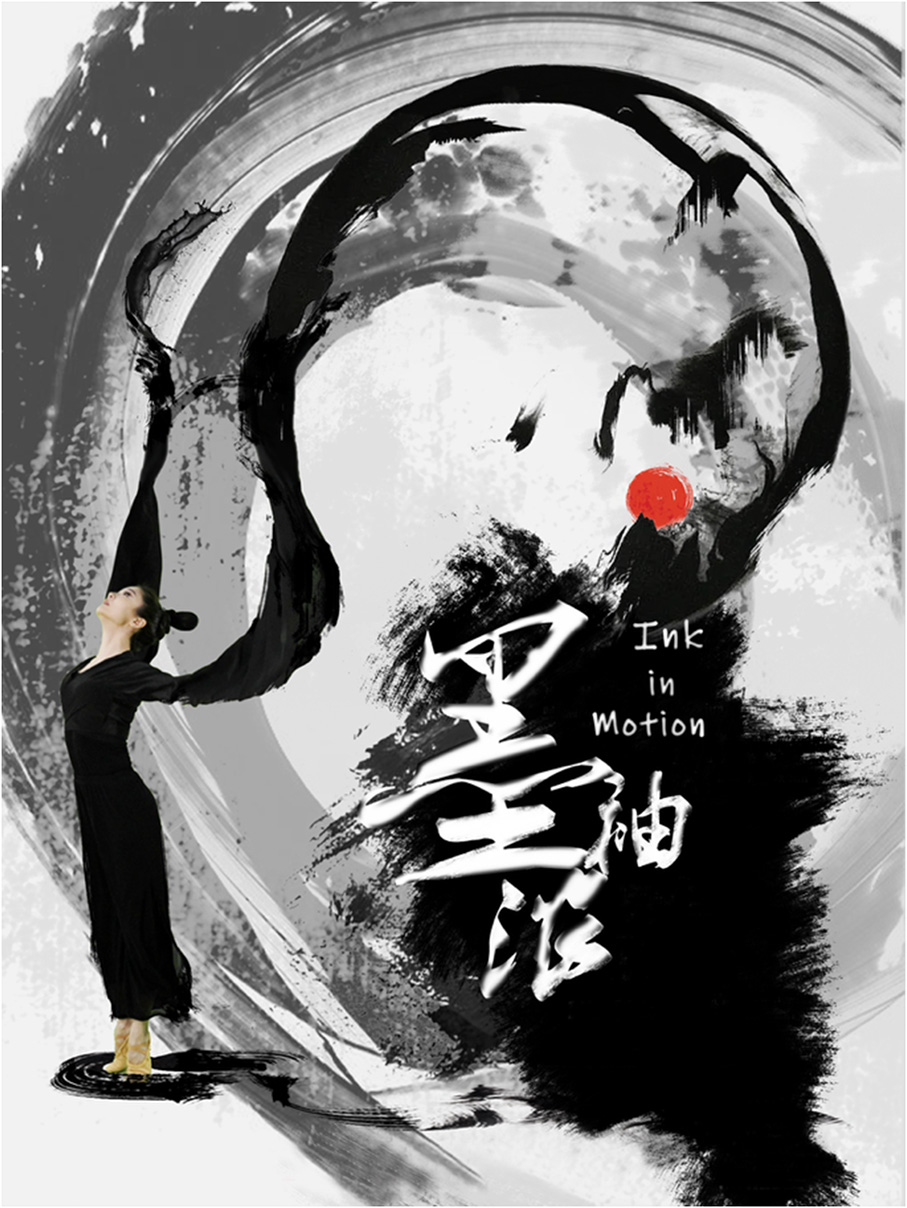
Ink in Motion is an interactive virtual reality dance experience that reimagines classical Eight Sights of Yanjing (ancient Beijing) through embodied ink choreography. Presented as a hybrid panoramic film, the work transforms the dancer’s motion—and the viewer’s gestures—into a shared medium of calligraphic ink. Flowing sleeves generate landscapes in real time, while hand-tracked interaction allows participants to draw ink directly into the virtual space, forming a responsive duet between performer and audience. By combining motion-captured dance, physically based cloth simulation, and gesture-driven ink rendering, the piece explores motion as medium, where cultural memory emerges through bodily movement rather than static representation. Ink in Motion reframes traditional landscape imagery as a living, co-created process, inviting viewers to re-experience heritage through embodied participation. The work demonstrates how immersive XR can transform spectatorship into authorship, offering a poetic model for redrawing cultural memory across past, present, and future.
Video
XR9575: “Body Oracle” Translator
Abstract
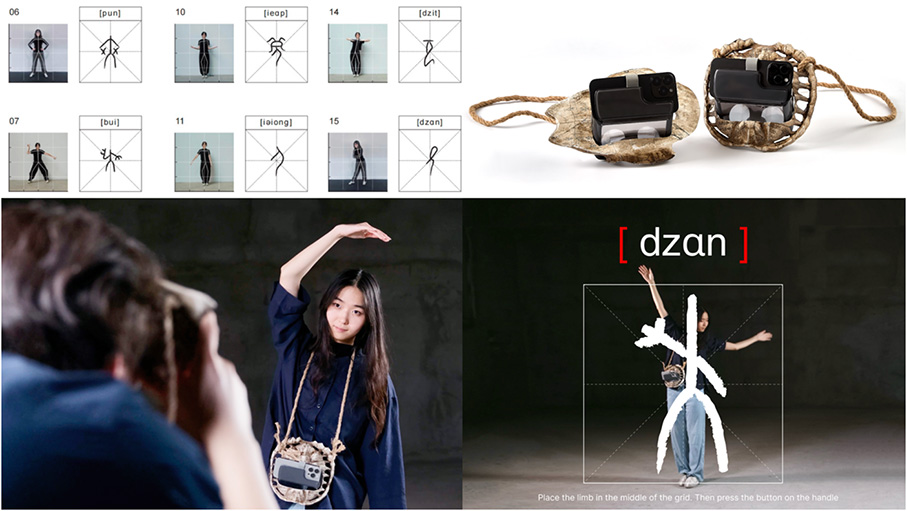
What if your body posture and movement could be read as a sentence? ”Body Oracle” Translator is a handheld mixed reality device that translates human body postures and movement into speculative AI-generated hieroglyphic characters in real time. This computational linguistic speculative design project creates an alternative language system inspired by Chinese Oracle-Bone Inscriptions, promoting cross-cultural collective bodily awareness in an era dominated by language-based communication. Glimpsing through the lens, users inhabit an ”alternative present”—one where these hieroglyphic characters have existed for thousands of years—where this alternative language reshapes our understanding of the body and influences collective body awareness.
Video




Sponsors
Platinum

Gold

Silver



Bronze


Supporters






©IEEE VR Conference 2026, Sponsored by the IEEE Computer Society and the Visualization and Graphics Technical Committee